
Mastering the Packed Floor: Essential Spatial Tactics for UK Social Dancers
Thriving Amid the Energy of Packed UK Social Dance Floors
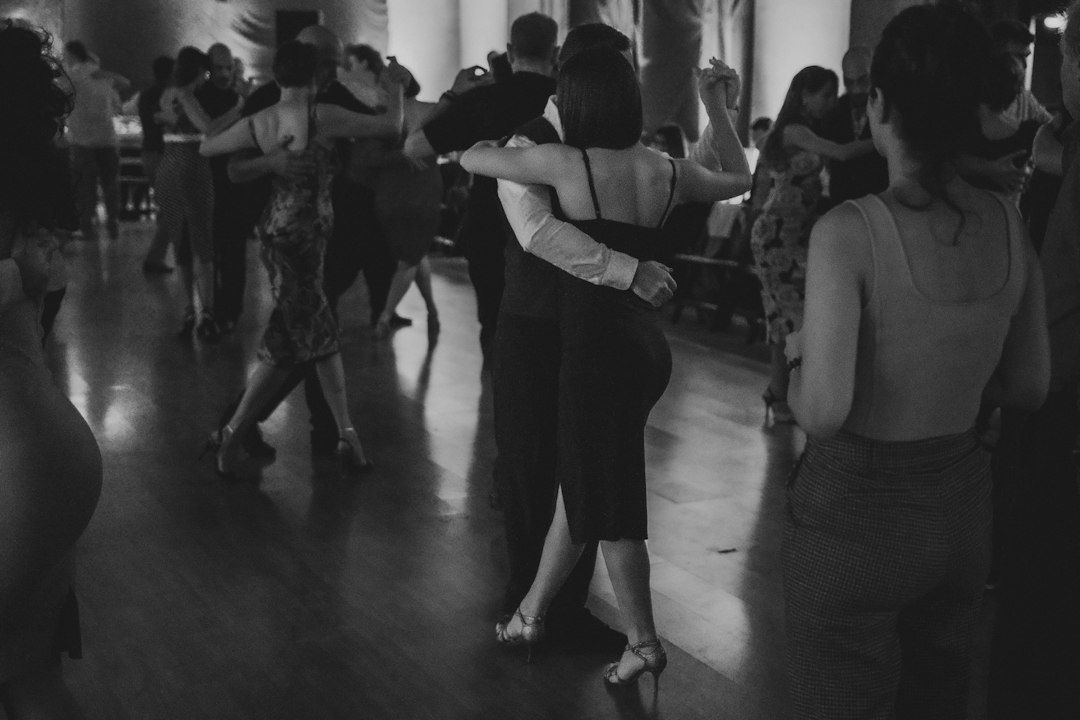
There is a particular buzz to a busy UK social dance floor. At a packed weekender, a lively jive hall, or a well-attended tea dance, the room seems to pulse as one: music lifts, shoes skim, partners change direction, and every available space fills with movement. That atmosphere is part of the appeal, but it also demands more than a reliable basic step. A floor that feels generous at the start of an evening can become highly compressed once attendance peaks.
Traditional wide choreography does not always survive that change of scale. Large kicks, sweeping turns and long travelling patterns can create anxiety for the dancer performing them, as well as risk for neighbouring couples. The essential mindset shift is from expansive stage performance to agile shared-space craftsmanship. Compact technique is not a limitation. It is a way to keep musicality, connection and creative expression alive while respecting the people dancing around you. The following floorcraft habits will help you reduce unnecessary travel, read developing hazards and respond calmly when the room tightens.
Shrinking the Slot to Keep Energy High in Compact Quarters
Start by identifying the space your pattern actually needs, rather than the space it might use in an empty studio. In Modern Jive, that often means shortening the slot between partners and reducing the distance travelled during returns, travelling turns and changes of place. In West Coast Swing, a leader can preserve the idea of a slot while making the anchor and extension more compact. Lindy Hop dancers can keep the pulse of the swing-out without launching the partnership across several metres. The aim is not to flatten the dance, but to make each action finish under control.
Connection is the steering system. A firm but comfortable hand connection gives the leader information about the available space and allows a change of plan before either partner drifts into another couple. Followers should remain responsive rather than automatically completing a dangerous movement simply because it has been initiated. When the floor closes in, elasticity in the arms becomes more valuable than force. A small compression, a contained redirection or a settled weight change can replace a full-distance pattern while preserving timing and partnership.
| Spacious approach | High-density adjustment |
|---|---|
| Long linear travel | Shortened slot with earlier weight collection |
| Large arm styling | Elbows and hands kept within a safe personal frame |
| Broad travelling turns | Smaller rotation around a stable centre |
| Full-size kicks and extensions | Low, controlled foot articulation |
Dynamic dancing does not require constant distance. Rotational energy can supply momentum when linear travel is unavailable. A compact turn, a clean rock step or a rhythmic change of weight can feel just as expressive as a large pattern when it is placed accurately in the music. Good floorcraft, as described by SwingdanceUK”s etiquette guidance, includes monitoring the surroundings and taking responsibility for controlling personal movement. That responsibility gives dancers more freedom, because controlled options remain available even when the room is crowded.
Footwork Amplitude and Keeping Rhythmic Precision Underneath Your Hips
Footwork is often the first place where spacious studio habits become hazardous. Big triple-steps and wide rock-steps can bring heels into contact with neighbouring shoes, especially when dancers are working close behind one another. A foot that reaches beyond the body”s balance point takes longer to collect, making it harder to react when another partnership suddenly changes direction. In a busy room, the safest step is usually the one that stays underneath the hips and returns quickly to a centred position.
Micro-footwork does not mean losing rhythmic detail. The beat can remain crisp through a smaller brush, a precise weight transfer or a clearly articulated pulse through the ankle and ball of the foot. Keep the knees available for adjustment, maintain a soft bend and avoid locking the legs as the floor becomes busy. Quiet lower-body mechanics are particularly useful in modern jive and swing, where the upper body can communicate the character of the movement while the feet remain economical.
- Reduce the length of the basic step by bringing each placement closer to the centre line.
- Check that the whole foot is not swinging unnecessarily past the line of the body, particularly during rock steps and kicks.
- Keep the weight fully organised before initiating the next action, so a sudden obstacle can be met with a pause or redirection.
- Practise the pattern at normal musical timing with minimal travel, then gradually add only the styling that the available space permits.
- Use the final repetition to test whether the feet remain quiet, balanced and ready to change direction.
Think of floor precision as a conversation between rhythm and restraint. The music may invite a sharp accent, but that accent can be delivered through timing, posture and weight rather than sheer size. Ballroom etiquette guidance also places responsibility on both partners to maintain awareness, avoid collisions and move with the general flow. A compact step that lands exactly on the beat is more impressive, and considerably safer, than an ambitious step that forces neighbouring dancers to retreat.
Reading the Room and Aligning with the Natural Traffic Stream
Busy-floor awareness works best through soft peripheral vision. Avoid staring at one couple or repeatedly looking down at the feet. Instead, allow the edges of the visual field to register clusters, open pockets, approaching backs and sudden changes of speed. The leader has a particular responsibility to scan the route, but the follower also has valuable information and should be able to signal that a direction is unsafe. A slight change in tone through the connection, a contained step or a quiet verbal warning can prevent a problem before it develops.
Many multi-genre nights contain both travelling and stationary behaviour. Some dancers circulate around the perimeter, while others create small swing or blues pockets in the centre. The distinction is not always formally announced, so observation matters. The perimeter may behave like a shared stream, with couples progressing in a broadly consistent direction, while central dancers may rotate within a smaller zone. Dancers can preserve everyone”s safety by respecting how dancers synchronize their overall direction of movement across busy ballroom perimeters.
- Look beyond the immediate partner connection to identify developing gaps and blocked routes.
- Expect a trailing kick, a blind turn or a wide styling flourish to travel farther than its owner anticipates.
- Give stationary interior dancers a clear margin rather than cutting directly through their pattern.
- When a cluster forms, reduce speed first, then choose a route around it.
- Use a brief glance and open posture to show that another couple has been noticed.
Anticipation is more effective than reaction. A dancer who notices a couple preparing a large turn can shorten the next action before the turn begins. Similarly, a leader approaching a congested corner can replace a travelling figure with a contained rhythm pattern, while a follower can resist being sent into a space that has disappeared. Patience is especially important for inexperienced dancers who are still learning spatial awareness. Experienced dancers should model that patience while also avoiding movements that knowingly disregard the safety of others.
Mastering Floor Navigation Across Travelling and Static Zones
On many ballroom-oriented floors, the outside edge functions as a travelling express lane, while the central area is more suitable for stationary or compact dancing. Modern jive and swing events can be less formal, and a mixed social night may combine several traditions, but the underlying principle remains useful: dancers moving around the room should not be forced to weave unpredictably through couples who are holding a central pocket. Understanding the established etiquette of the progressive Line of Dance helps social dancers circulate seamlessly without clipping neighbouring couples.
Merge points need particular care. A leader should not accelerate into a travelling lane simply because a small gap appears, then stop abruptly when the gap closes. Enter with a compact action, match the speed of nearby couples and leave enough room for a partner to complete the movement. Followers can help by maintaining a stable axis and giving early information through the connection when a route feels blocked. If a merge cannot be made safely, staying in place for one musical phrase is often better than forcing entry.
- Use posture to show direction clearly, with the torso organised before the feet travel.
- Offer a subtle glance toward the intended route without breaking partner connection.
- Slow down before corners, crowded doorways and areas where dancers are changing partners.
- Leave a buffer around stationary couples, particularly those practising intricate footwork or styling.
- Resume travelling only when the route is visibly open, rather than relying on a hoped-for gap.
Continuous progression is a long-standing convention in travelling ballroom dances, but social events often adapt that convention to suit the music, the venue and the mix of styles. The most helpful rule is not rigid obedience to one format. It is consistency. When dancers make their intentions readable and avoid sudden, unexplained changes, the whole floor gains a smoother rhythm. A small reduction in speed can prevent several couples from having to brake at once.
Grace Under Pressure and the Art of Neutralizing Floor Collisions
Defensive framing protects both partners when the floor becomes unpredictable. Keep elbows comfortably available rather than allowing the arms to collapse completely, and use the free arm as a soft spatial sensor or buffer. It should never become a rigid barrier or a weapon. The frame can help protect a partner”s back and head from a stray elbow, while a timely redirection can move the partnership away from a dangerous line. The guidance offered by SwingdanceUK emphasises monitoring the environment, controlling personal movement and moving toward safer areas when necessary.
Accidental contact will occasionally happen, even among attentive dancers. The immediate response should be simple and human: acknowledge the bump with a friendly smile, a quick nod or a brief apology. Avoid assigning blame in the middle of the floor. If the contact was substantial, pause long enough to check that both partners are comfortable before returning to the music. A calm response protects the atmosphere and helps preserve trust between partners, especially when one dancer is new or already feeling uncertain.
- Stabilise the partnership first by settling the weight and checking that both dancers are upright.
- Use a short apology or nod, regardless of who caused the contact.
- Move away from the hazard rather than continuing the same pattern into the crowded area.
- Adjust the next few actions to a smaller scale and lower speed.
- Return attention to the music and partner connection once the space is safe.
The golden rules are straightforward: control personal movement, protect the partnership, respect the shared floor and treat mistakes as part of learning. Beginners deserve room to improve, while experienced dancers should use their greater skill to reduce risk rather than claim more space. A warm social scene is built through repeated small choices, including clear invitations, considerate movement, suitable footwear and courteous recovery after contact. Floorcraft is not separate from dance quality. It is one of the clearest signs that technical ability is being used generously.
Step Onto the Social Floor with Poise and Unshakable Confidence
Tight spatial technique liberates musicality rather than restricting it. When steps stay underneath the centre, connection becomes more responsive, turns become easier to redirect and rhythmic choices can be made without fear of colliding with a nearby couple. Compact patterns also sharpen listening. A dancer begins to notice the difference between a musical accent that needs a large action and one that can be expressed through a small pulse, a change of level or a perfectly timed weight transfer.
Every busy UK social floor is a shared project. Leaders, followers, experienced dancers, beginners, teachers and organisers all contribute to whether the room feels welcoming. Before the next crowded dance, establish a practical intention: keep the steps contained, scan the route, match the prevailing flow and respond graciously when plans change. With those habits in place, the floor becomes less a test of survival and more an opportunity to move with clarity, generosity and unshakable confidence.

You May Also Like
Wallpaper Design Ideas that Best Express Movement in Dance Studios
Top Four Reasons Why Dance Classes Are Essential